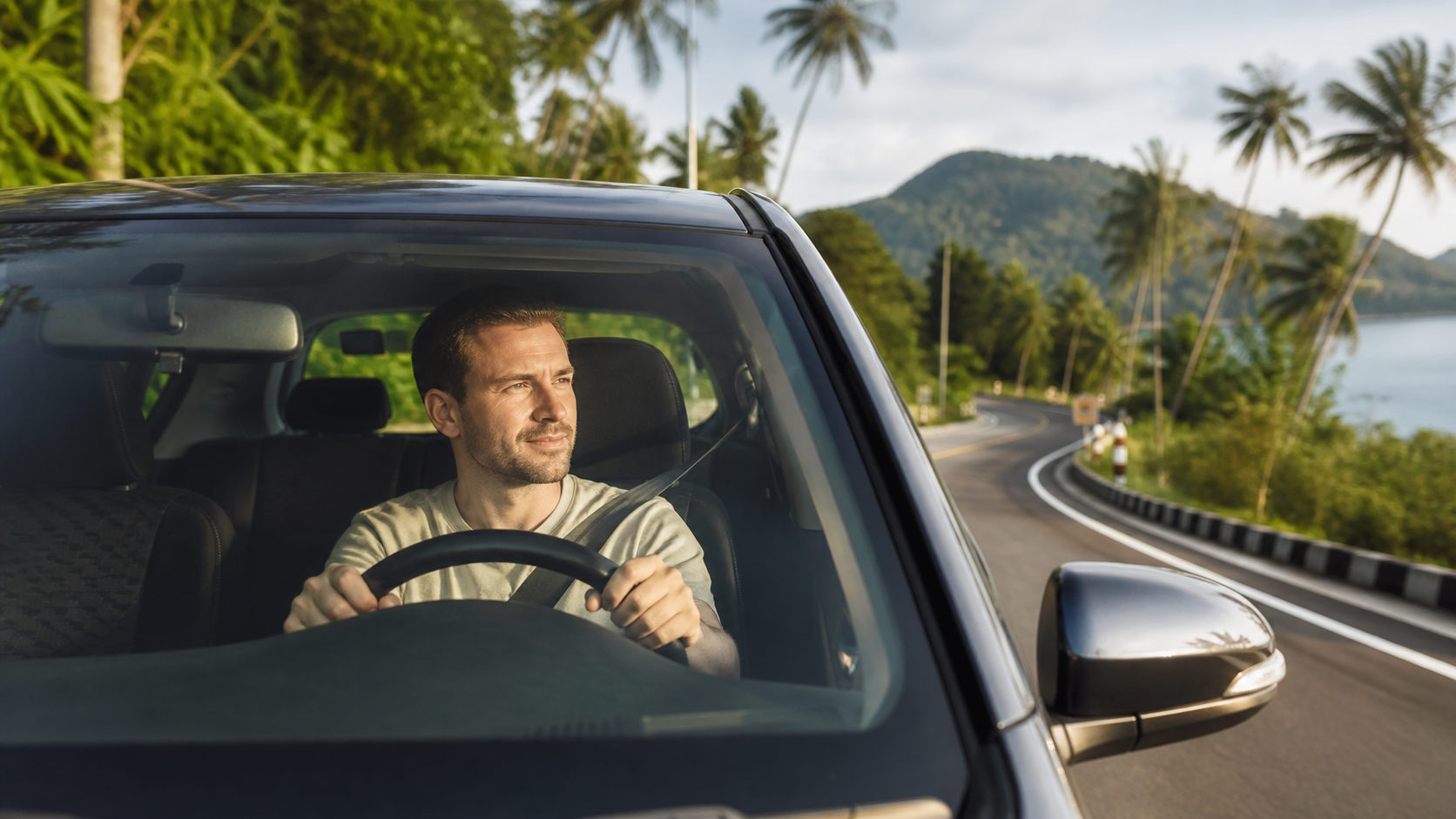
If you are staying longer than a holiday and want to drive, a Thai licence is the clearest long-term option. The official fees are low, but documents, appointments and testing can vary by provincial office. An accepted full foreign licence may simplify the route; confirm that before you attend.
Do you actually need one?
For a short visit, Thailand recognises qualifying foreign licences and IDPs issued under the Geneva 1949 or Vienna 1968 road-traffic conventions, as long as the document is valid and covers the vehicle class. An IDP accompanies the underlying licence; it does not replace it. Visa status, document validity, rental terms and insurance conditions are separate questions, so longer-term visitors should confirm their position with the DLT and insurer and obtain a Thai licence when appropriate.
Carry the original licence and any required IDP when driving. Police may check documents at roadside checkpoints, and a rental company handing over a vehicle does not prove that you meet the legal or insurance requirements.
Two ways to do it
There are two broad routes: recognition of an accepted full foreign licence, or a standard first-time application. A valid foreign licence may reduce the testing required, but the DLT must first accept the licence and supporting evidence. If it does not, expect the standard theory and practical route. Ask the provincial office which route applies before booking.
What you need to bring
This is where most of the faff is, so get it ready before you go:
- Your passport and evidence of lawful stay requested by the office.
- Proof of your Thai address in the form accepted by your provincial office, such as a residence certificate or qualifying work-permit evidence. Issuing times vary.
- A medical certificate. You get this from almost any clinic in a few minutes for about 100 to 300 THB (about USD 3.06 to 9.19, £2.28 to 6.83, and €2.63 to 7.9). It's only valid for 30 days, so get it the week of your appointment, not months ahead.
- Your foreign licence. If it's not in English, you'll also need a certified translation and, in some cases, a verification letter from your embassy.
- Photos are usually taken at the office, so you don't need to bring your own.
Where you go and what happens
You apply through a Department of Land Transport (DLT) office. Check its appointment channel and current document list before travelling. The tests and training depend on whether the office accepts your foreign licence for conversion; do not assume the practical test will be waived until the DLT has checked your documents. Allow for a return visit if the office cannot complete every stage on the same day.
What it costs
The government service guide lists a 5 THB application fee plus 200 THB for a temporary private-car licence, or 5 THB plus 100 THB for a temporary private-motorcycle licence. That makes the official totals 205 THB and 105 THB respectively. Medical certificates, translations and proof-of-address documents are separate and vary by issuer, so obtain the current document list before setting an all-in budget.
Does your nationality change anything?
The core process is set nationally, but the evidence needed to recognise a foreign licence can depend on the document, language and issuing country. Ask the DLT whether it needs a certified translation or verification letter. Do not assume every English-language or European licence receives identical treatment.
Benefits and downsides
A Thai licence gives longer-term residents a locally recognised driving credential and avoids relying indefinitely on a visitor document. It does not override policy exclusions or guarantee an insurance claim, so keep the licence valid, use the correct vehicle class and read the policy conditions.
Get the next one first
One useful email a week on building a life abroad. No spam.