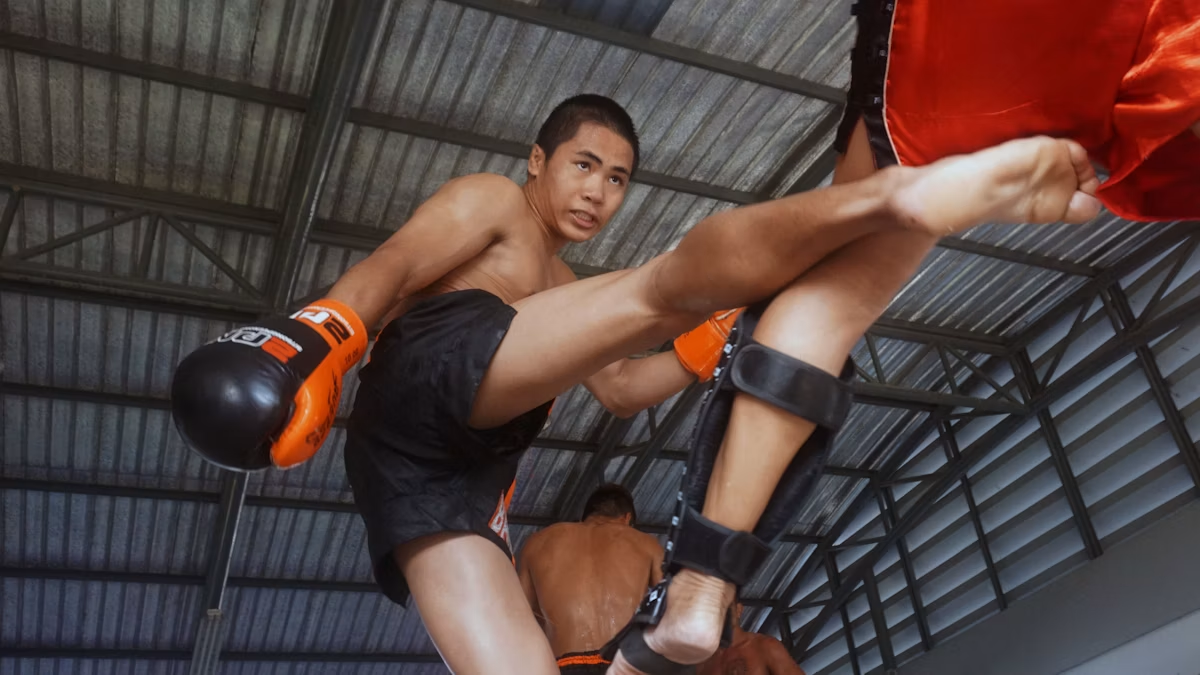
Phuket works well for a first Muay Thai trip because you can choose between traditional camps, large mixed-discipline facilities and general fitness programmes without leaving the island. That choice is useful, but it makes “best gym” lists less helpful than a clear selection method.
Choose your area before your camp
Chalong's Soi Ta-iad, often called Fitness Street, concentrates Muay Thai, strength training, food and recovery businesses in one walkable training area. Rawai and Nai Harn suit people who want southern beaches alongside camps such as Sinbi and AKA Thailand. Other parts of Phuket have good local gyms, but daily driving matters more than a famous name.
If training is the purpose of the trip, choose accommodation within a short walk or easy ride of the camp. If training is one part of a holiday, choose the area first and test nearby gyms. Our Phuket area guide explains the wider trade-offs.
Three camp formats beginners will find
- Large multi-discipline camp: Tiger Muay Thai publishes separate beginner, intermediate and advanced Muay Thai classes alongside MMA, BJJ and fitness. This suits someone who wants a broad timetable and clear level split.
- Traditional Muay Thai camp: Sinbi says it welcomes complete beginners as well as fighters, with group and private training in Rawai. This suits someone primarily interested in Muay Thai technique and regular pad work.
- Combat-sports resort: AKA Thailand markets Muay Thai, MMA, BJJ and fitness in a larger facility near Rawai. This suits someone who wants varied combat-sport training and on-site amenities.
These are examples, not a paid ranking. A smaller neighbourhood gym may give a beginner more individual attention than a famous destination camp. Visit at the time you would normally train and look at the actual class, trainer-to-student ratio, hygiene and atmosphere.
Trial before you commit
Ask whether beginners train separately, how much pad work is included, when sparring begins, whether equipment can be borrowed and whether a private introductory session is available. Then take one class. The best technical programme is irrelevant if the timetable, heat, class size or coaching style does not suit you.
Compare passes on equal terms. A “monthly” package may mean a fixed number of days, one session a day or unlimited classes; strength, yoga, recovery facilities and accommodation may be separate. Use the live provider price page rather than a screenshot or old blog table.
Costs, equipment and insurance
Budget for training, hand wraps, gloves or rental equipment, laundry, water, transport and recovery days. Direct providers publish current class and package prices, but those rates change often enough that this guide does not freeze them into a yearly table.
Before booking, read your travel or health policy's sports exclusions. Muay Thai, sparring, fights and motorbike travel to the gym may be treated differently. Ask the insurer in writing if the wording is unclear, and use the Thailand health-insurance guide for the broader cover checklist.
A sensible first week
- Arrive, sleep and acclimatise before the first hard session.
- Try one beginner or all-levels class at two nearby gyms.
- Use a private session if you need stance and basic technique before a large group.
- Leave at least one full recovery day between the first few sessions.
- Buy a longer package only after the commute and coaching style work in real life.
Training also provides a ready-made social rhythm: the same sessions, cafes and recovery days put you around familiar people without forced networking. For more ways to build a circle, read the Phuket community guide.