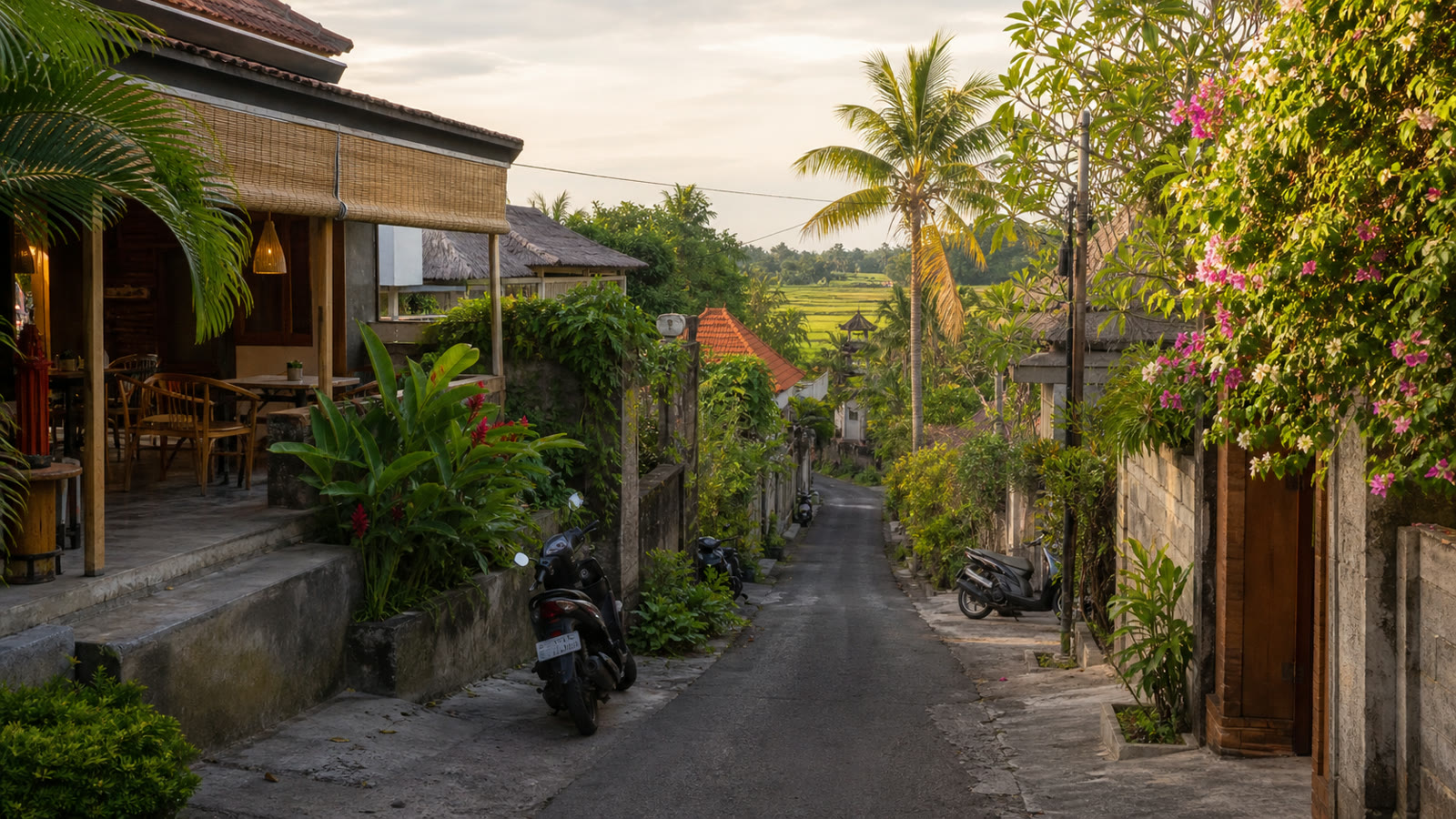
Bali is one island with several completely different daily lives. A month in a Canggu guesthouse tells you almost nothing about living near a school in Sanur, building a quiet routine in Ubud or commuting from the Bukit. The useful question is not simply where is best. It is which area makes your ordinary week easier.
Start with the broad Bali city guide and the 2026 Bali cost guide, then use this page to narrow the map. Book short first. Test the road at 08:00 and 17:00, check the actual home internet, listen for construction and dogs after dark, and work out where groceries, exercise and normal meals will come from.
The quick answer
Choose Canggu or Berawa if community density, gyms, cafes and nightlife matter most. Choose Pererenan if you want access to that ecosystem with a little more breathing room. Choose Ubud for wellness, creativity and inland space. Choose Sanur for a calmer, flatter and more settled routine. Choose Seminyak, Kerobokan or Umalas for restaurants, services and central south-Bali access. Choose Uluwatu and the Bukit when surf and cliff life are the point. Choose Denpasar when value, local city life and practical services matter more than the expat bubble.
Best Bali areas for singles
Canggu and Berawa: easiest for instant social life
This is still the simplest place to land if you want coworking, fitness, surf, founder circles and a full calendar without much detective work. Berawa is the more connected, built-up version; central Canggu is busier and noisier; the further edges can feel calmer until traffic closes the distance again. The trade-off is obvious: high housing pressure, heavy road use and a lifestyle premium on almost everything you can photograph.
Seminyak and Kerobokan: restaurants, convenience and a more mature crowd
Seminyak suits people who want dining, bars, shops and established services without the full startup-campus energy of Canggu. Kerobokan gives you more residential options and better positioning between Seminyak, Umalas and the Canggu corridor. Neither is peaceful by default, so inspect the exact street rather than buying a neighbourhood label.
Uluwatu and the Bukit: best when surf is the organising principle
The Bukit works brilliantly when you actually want beaches, cliffs, training, surf and a villa-led routine. It works less brilliantly when every work meeting, hospital visit or friend lives an hour north. Walkability is limited, ride-hailing coverage and pickup behaviour vary by area, and the pretty map distance ignores the reality of narrow roads.
Best Bali areas for couples
Sanur: the strongest everyday compromise
Sanur is calmer, more established and easier to use on foot than much of south Bali. The beachfront path, supermarkets, restaurants, clinics and access towards Denpasar make it particularly good for couples who want a proper routine rather than a permanent weekend. Nightlife is modest, which is either the drawback or the entire point.
Ubud: creative, green and slower
Ubud suits couples whose week revolves around wellness, creative work, food, community classes and inland nature. Central Ubud can be congested and intensely visitor-facing, while villages further out offer more space at the cost of scooter dependence. Check damp, mould, construction, drainage and the trip to serious medical care before signing anything long.
Pererenan and Seseh: connected without living in the loudest block
Pererenan has become an extension of the Canggu lifestyle rather than a secret alternative, but it can still deliver a more residential rhythm. Seseh pushes that idea further. The further west you go, the more important it becomes to test daily journeys and delivery coverage rather than assuming the quiet villa is only ten easy minutes from everything.
Best Bali areas for families
For families, school location should choose the home. Bali traffic is too unpredictable to treat a cross-island school run as a minor inconvenience. Sanur is strong for a settled routine and access to Bali Island School. Umalas and Kerobokan can work for families using schools in the Canggu corridor. Families choosing Green School often build their housing search around the Sibang Kaja and Ubud side rather than trying to commute from the coast. Admissions, fees and transport arrangements need direct confirmation before a lease.
Look beyond bedrooms and a pool. Check road safety outside the gate, reliable water, backup power, mosquito control, the nearest pharmacy and clinic, and whether a child can reach friends without an adult driving every journey. A large villa can create a very small life if it is isolated from school and community.
Areas people overlook
Denpasar is the practical counterargument to the resort belt: more local life, stronger everyday services and often better value, but less of the instant international social layer. Renon offers a more organised central routine. Nusa Dua is polished and convenient for resort or hospitality-linked work but can feel detached from the rest of island life. Jimbaran splits the difference between the airport, Bukit and south-Bali services, with very different pockets around the bay and hills.
Renting without creating a daily commute problem
Use the first month as paid research. See the property in person, confirm who can legally rent it, get the inventory and maintenance terms in writing, and understand whether electricity, water, internet, banjar fees, pool care and rubbish collection are included. Never send a large deposit because a WhatsApp video feels urgent.
A cheaper villa can become expensive when every meal, gym visit, school run and work session needs a ride. Add time as well as money. If your two most important weekly destinations sit on opposite sides of a traffic bottleneck, choose again.
Visa and arrival admin to check before the lease
The decision rule
Singles should optimise for repeat contact, not the maximum number of venues. Couples should optimise for the routine they actually share. Families should optimise for school, healthcare and safe movement. Bali rewards people who choose a small, workable radius. It punishes anyone who treats the whole island as one neighbourhood.
Get the next one first
One useful email a week on building a life abroad. No spam.